

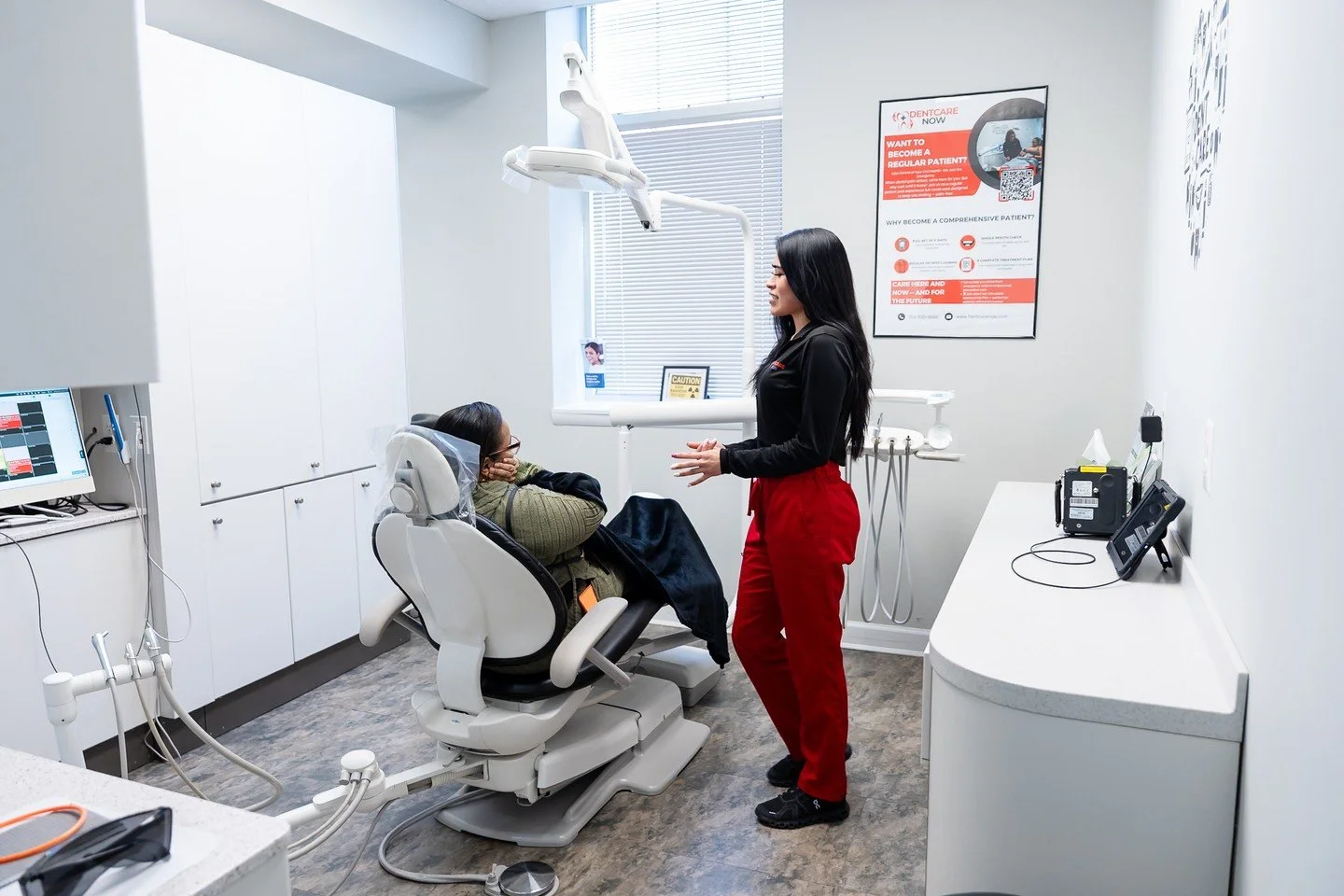
If a dental emergency happens at night or on the weekend, first decide whether you need the ER or a dentist. Go to the ER if swelling is spreading toward your eye or neck, if you have trouble breathing or swallowing, or if you have a high fever or a jaw injury. For everything else, control the pain and protect the tooth tonight, then see an emergency dentist the next morning. At Dentcare Now in Fairfax, VA, we are open 7 days a week, including weekends and holidays, so a problem that starts on a Friday night does not have to wait until Monday.
A dental emergency is any problem that causes severe pain, bleeding that will not stop, signs of infection, or damage that could cost you the tooth if you wait. Common examples:

A toothache strong enough to keep you awake or that pain relievers do not touch
A knocked-out or loosened adult tooth
A cracked or broken tooth, especially with pain or a sharp edge
Swelling in the gums, face or jaw, or a pimple-like bump on the gum
A lost crown or filling that leaves the tooth sensitive
Bleeding after an extraction that does not slow down with pressure
A small chip with no pain, mild sensitivity or a loose orthodontic wire can usually wait for a regular visit. If you are not sure, treat it as urgent.
Most hospital emergency rooms do not have a dentist on staff. The ER can treat a spreading infection, control pain and handle injuries to the face, but it cannot fix the tooth. Go to the ER, or call 911, if you have:
Swelling that spreads toward your eye, down your neck or under your tongue
Trouble breathing or swallowing
A high fever along with tooth or jaw pain
A possible broken jaw or a serious injury to the face or head
Bleeding that will not stop after 20 minutes of firm pressure
After the ER, you will still need a dentist to treat the cause. Plan to see an emergency dentist as soon as the office opens.

Rinse with warm salt water and gently floss to remove any trapped food.
Take an over-the-counter pain reliever as directed on the label.
Hold a cold compress on the outside of your cheek for 15 minutes at a time.
Do not put aspirin directly on the gum. It can burn the tissue.
Sleep with your head raised on an extra pillow to reduce throbbing.
Pick the tooth up by the crown, the part you chew with. Do not touch the root.
If it is dirty, rinse it briefly with milk or water. Do not scrub it.
Try to place it back in the socket and bite gently on a clean cloth.
If it will not go back in, keep it in a small cup of milk or inside your cheek.
Get seen as fast as possible. A tooth has the best chance of being saved within the first hour.
Rinse with warm water and save any pieces you can find.
Use a cold compress to limit swelling.
Cover a sharp edge with sugar-free gum or dental wax.
Chew on the other side until the tooth is repaired.
Many breaks can be repaired in a single appointment. Read broken tooth repair for what to expect.
Keep the crown somewhere safe and bring it with you.
A dab of dental cement from a pharmacy can hold a crown in place for a short time. Never use household glue.
Cover an open filling with sugar-free gum or dental wax to protect the tooth.
Rinse with warm salt water several times.
Use a cold compress on the outside of your face.
Do not try to pop a bump on the gum.
If the swelling spreads or you develop a fever, go to the ER.
An abscess will not go away on its own, even if the pain fades. It needs treatment, often a root canal or an extraction.
You do not have to wait for business hours to get on the schedule. Our team can be reached by call, text or online booking at any hour, so you can book at 2 AM and be seen when we open that morning. Our Fairfax office is open Monday through Sunday, 9:00 AM to 5:00 PM, including weekends and holidays.
Same-day treatment: walk-ins are welcome, and most emergencies are treated the same day.
Every specialty under one roof: root canals, extractions, implants and gum treatment are handled here, so you are not sent somewhere else.
Sedation: sedation dentistry is available if anxiety or a long procedure is a concern.
Learn more about our emergency dentist in Fairfax, VA.
Usually not. ER doctors can treat infection, pain and facial injuries, but they cannot fill, repair or save a tooth. You will still need an emergency dentist afterward.
Yes. We see new patients for emergencies, and you do not need a referral. Walk-ins are welcome.
A mild ache with no swelling may wait a day, but pain from a damaged nerve or an infection usually gets worse. Since we are open on Saturday and Sunday, there is no need to wait through the weekend.
Do not let cost stop you from getting care, because an untreated infection gets harder and more expensive to fix. See emergency dentist costs for typical prices and financing options.
Urgent care clinics can prescribe pain relief or antibiotics, but like the ER, they cannot treat the tooth itself. An emergency dentist can find the cause and treat it in the same visit.